On Trans Day of Visibility, we recognize and celebrate the strength, resilience, and diversity of trans communities. Visibility can be empowering. It can affirm identity, build connection, and foster understanding. However, visibility is also complicated for many trans people. In a time of rising intolerance and heightened scrutiny, being seen can come with risk, vulnerability, and profound emotional weight.
For some trans people, visibility is not a choice. People may be outed, misgendered, or otherwise made visible in ways that compromise their safety, autonomy, and dignity. These experiences remind us that visibility is not always empowering, and that respect for trans people must never depend on how, when, or whether they are seen.
Within trans communities, experiences of visibility are also shaped by factors such as race, class, disability, and access to resources. “Passing” may be a goal for some trans people, but not for all. It can also function as a form of privilege that not everyone has access to, sometimes creating hierarchies within the community itself. We affirm that all trans identities and expressions are equally valid, regardless of how closely they align with societal expectations or norms.
As a community-based legal clinic, we see firsthand how systemic barriers and discrimination continue to affect trans individuals in accessing justice, safety, housing, employment, and healthcare. Visibility alone does not guarantee protection or equity. It must be accompanied by meaningful action, solidarity, and structural change.
To trans people in our community: your safety, well-being, and autonomy matter. Whether you choose to be visible or not, your identity is valid. We encourage you to care for yourselves in whatever ways feel right—seeking support, setting boundaries, and honoring your own needs in a world that does not always make space for you.
To allies: this is a moment not only to celebrate, but to listen, learn, and act. Trans people enrich our communities with their creativity, insight, and courage. Recognizing this means standing up against discrimination, advocating for inclusive policies, and ensuring that trans voices are centered—not just today, but every day.
We remain committed to advancing dignity, safety, and justice for trans people, and to working alongside the community toward a future where visibility is met with respect, protection, and genuine belonging.
Today, on the International Day for the Elimination of Racial Discrimination, we pause to reflect, to remember, and to recommit.
Racial discrimination continues to shape the realities of many individuals and communities—impacting access to justice, opportunities, and dignity. This day is not only about acknowledging injustice, but about taking meaningful action to dismantle it.
We honor the resilience of those who continue to stand against racism in all its forms. We recognize the importance of amplifying voices that have been historically marginalized. And we reaffirm our commitment to building a future rooted in equity, inclusion, and justice for all.
Here in Hamilton, we see both the challenges and the ongoing efforts to address them—from community advocacy and grassroots organizing to local conversations about equity and accountability. Let this be more than a moment. Let it be a continued commitment in our city—where each of us plays a role in challenging discrimination, uplifting one another, and creating lasting change.
March 20th is International Francophonie Day.
This annual day celebrates the French language and diverse Francophone cultures through cultural activities held worldwide.
Francophone Facts! The French presence in Ontario dates back nearly 400 years! More recently, in 2009, the adaptation of the Inclusive Definition of Francophone (IDF) added nearly 50,000 more identified Francophones. The IDF includes not only people whose mother tongue is French but also individuals whose mother tongue is neither English nor French (allophones) but who have a particular knowledge of French as an official language and use it at home. Under the IDF, a Moroccan family, for instance, that speaks Arabic and French at home is considered Francophone.
There are 13.5 million people in Ontario and 611,500 of them identify as Francophone. That’s nearly 5% of the province’s population. Meanwhile, the City of Hamilton’s Francophone population reached 6,940 people, or 2.1% of our city’s total population.
Source: Office of the French Language Services Commissioner of Ontario. https://csfontario.ca/wp-content/uploads/2014/10/2014.09.18-Francophones-in-Ontario_infographic_J.pdf
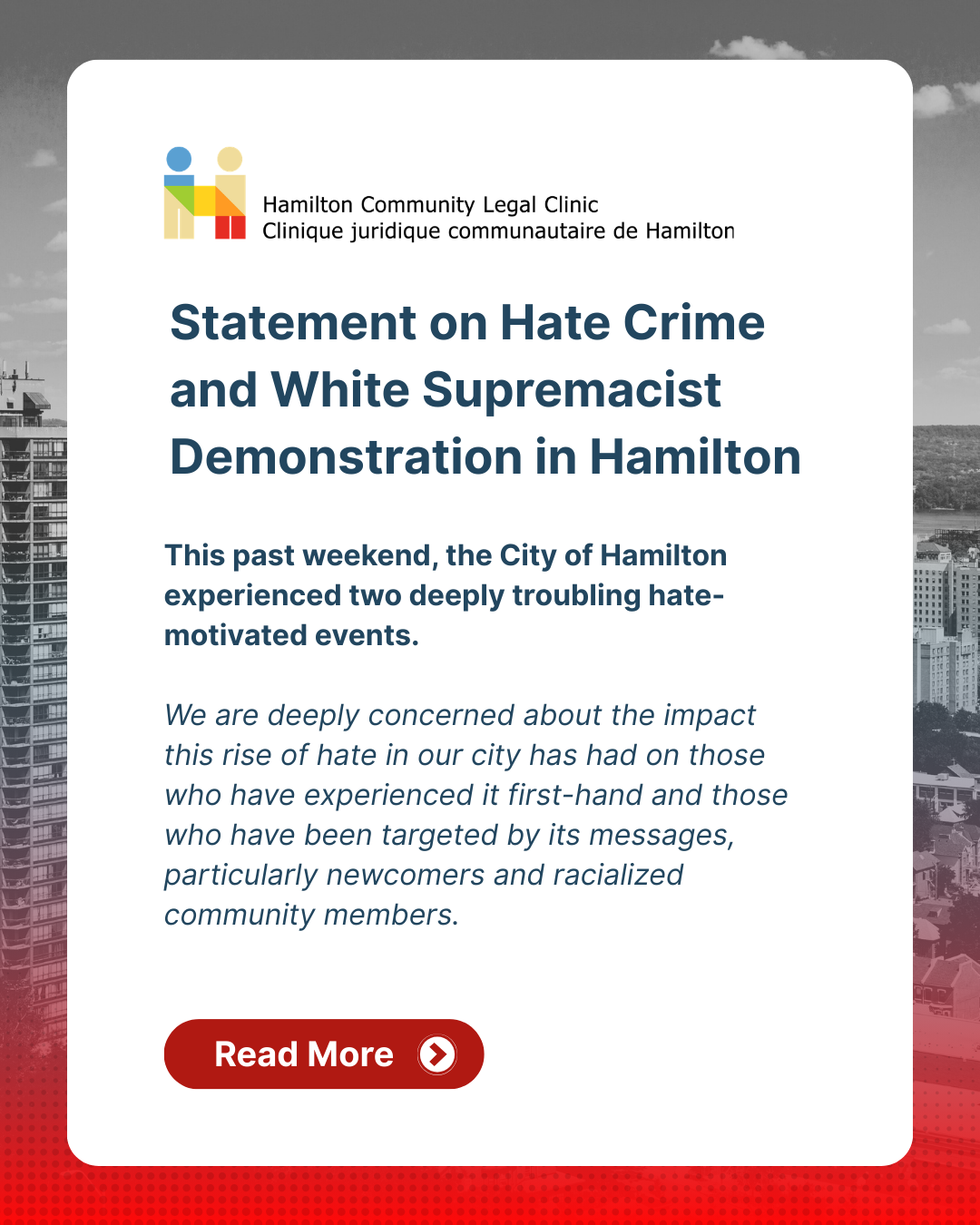
This past weekend, the City of Hamilton experienced two deeply troubling hate- motivated events.
On Saturday, February 21, Hamilton Police Services (HPS) reported that a woman experienced an unprovoked, hate-motivated assault in the downtown core. The woman was standing on a public street in the area of Augusta Street when she was approached by an intoxicated man who verbally harassed her using derogatory language and struck her in the face. HPS reported that a 28-year-old male was arrested and charged the following day.
On Sunday, February 22, white supremacists held a demonstration in front of Hamilton
City Hall. The demonstration involved 19 masked men, dressed all in black. They performed a Nazi salute while displaying their group’s flag and a banner. HPS reported that police attended the area, but the demonstrators had dispersed by the time officers arrived.
For both events, HPS is asking anyone with information to contact police at 905-546-4925, or to contact Crime Stoppers at 1-888-222-8477, if they wish to provide information anonymously.
Unfortunately, neither of these incidents is isolated. Violent incidents of hate targeting individuals based on their sexual orientation, gender identity, race, and religion have been increasing. Fascist, white supremacist ideology is becoming more visible in our city, with its supporters feeling emboldened to promote their presence and their message in our public spaces.
We are deeply concerned about the impact this rise of hate in our city has had on those who have experienced it first-hand and those who have been targeted by its messages, particularly newcomers and racialized community members.
We stand in solidarity with all Hamiltonians who condemn these acts of hate, including our civic leaders and partners, and we remain committed to creating a Hamilton where everyone can live without fear and with a sense of belonging.
We encourage anyone who has experienced hate, been impacted by hate, or who has information about a hate incident to reach out to us and our partners for support and community resources.
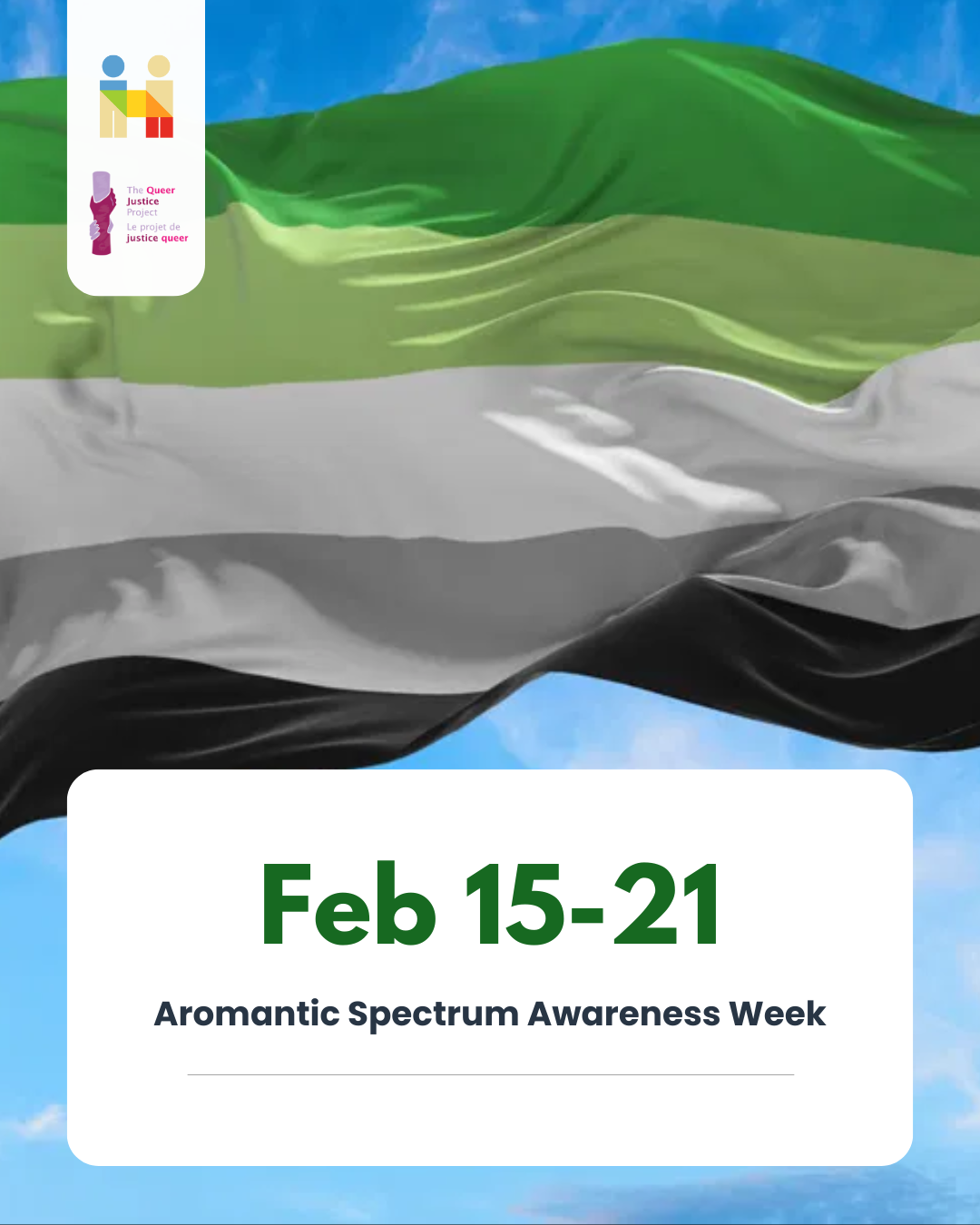
Aromantic Spectrum Awareness Week is an annual, week-long event held to raise awareness and educate people about the identities and issues aromantic people face.
Aromantasism is an identity that sits under the “ace” umbrella. The prefix “ace” is defined as the absence of attraction. It is the opposite of “allo”, meaning “to have attraction”.
There are many different forms of attraction, some include: platonic, romantic, sexual, sensual, estetic, alterous, and more! Ace people may have some, or total absence of attraction in one or more of the attraction categories.
Under the romance category of this split attraction model people may identify as aromantic, alloromantic or somewhere in between.
In other words, “Aromanticism is a romantic orientation, which describes people whose experience of romance is disconnected from normative societal expectations, often due to experiencing little to no romantic attraction, or sometimes feeling repulsed by romance or being uninterested in romantic relationships.”
The aromantic flag consists of five equal horizontal stripes. From top to bottom they are: Dark green and light green representing the aromantic spectrum, white representing platonic love and friendships, and lastly grey and black representing the sexuality spectrum.
Green was chosen as the primary colour due to it being the opposite or red, which is often associated with romance.
“Amatanormativity: Amatonormativity is the assumption that a central, exclusive, romantic relationship is normal for humans, and is a universally shared goal.”
Due to misinformation and stereotyping, many aromantics have felt the repercussions of both invisibility and bigotry in and outside the queer community due to amatanormativity.
As a result, there are many social and legal hurdles aro people face globally.
Amanormativity in law negatively affects rights including, but not limited to:
Sources:
Black History Month is a time to honour, celebrate, and reflect on the rich history, resilience, and contributions of Black communities in Canada and around the world. It is an opportunity not only to recognize past achievements but also to acknowledge the ongoing struggles against racism, discrimination, and systemic inequities.
As we celebrate Black History Month, we reaffirm our commitment to equity, inclusion, and access to justice. We must continue to challenge anti-Black racism, amplify Black voices, and create spaces where Black communities are respected, supported, and empowered.
Let this month be not only a moment of remembrance but also a call to action—toward meaningful change, solidarity, and a more just future for all.
January 21, 2026
To our Funders, Partners and the Hamilton Community,
On behalf of the Board of Directors, I am writing to announce the retirement of our Executive Director, Clare Freeman, effective January 23, 2026.
While Clare has spent the last four years leading our organization, her retirement marks the conclusion of her 24-year career of continuous non-profit leadership within the Hamilton community. Throughout more than two decades of service, Clare has dedicated her career to improving the quality of life for those in crisis.
We thank Clare for bringing her talents, experience, and passion to her leadership at the Clinic, ensuring access to legal services for low-income individuals.
As we look to the future, the Board will be initiating a comprehensive search for a new Executive Director to build upon this strong foundation. In the interim, we are pleased to announce that our Director of Legal Services Michael Ollier and our Manager of Client Intake and Community Programs Lindsay Beckham will share the Executive Director role.
Sincerely,
Hamilton Community Legal Clinic/Clinique juridique communautaire de Hamilton
Law Clerk
Permanent– Full Time
Listed on CharityVillage
We are looking for an experienced Law Clerk to join our housing legal team who will
provide essential support to housing law practitioners, focusing on delivering accessible,
high-quality legal services to low-income clients. The role involves a mix of administrative,
client-facing, and legal tasks, supporting tenants in understanding and exercising their
rights while helping address housing insecurity and barriers to justice.
Please apply on charityvillage.com no later than Friday, December 12th, 2025.
This week, the Hamilton Police Services (HPS) released community alerts about a hate motivated assault against a transgender community member. This incident occurred in the early morning of Saturday, October 25 at approximately 2:30 a.m., in Hess Village. Although two arrests were made, police are still actively seeking information about additional individuals involved. We encourage anyone with information that could assist the police investigation to contact Detective Lyndsay Scott at LScott@hamiltonpolice.ca or 905-546-5678. Information can also be provided anonymously to Crime Stoppers at 1-800-222-8477. Include images/screen shots from: https://hamiltonpolice.on.ca/news/update-arrests-made-in-hate-motivated-assault/ Unfortunately, this is not the only recent hate motivated attack against a member of Hamilton’s Two-Spirit, trans, nonbinary, and gender diverse community that we are aware of.
Attacks against our local trans siblings are increasing in number and severity. This rise in hate is directly tied to the dehumanizing politicization of trans lives. In the United States, the Trump administration is implementing policies designed to erase trans people from public life. In our own country, the provincial governments of Saskatchewan and Alberta have invoked the Charter’s notwithstanding clause to strip trans people of their fundamental rights protections. And in Hamilton, we’ve witnessed billboards calling for an end to gender-affirming care for trans youth and academic research designed to undermine access to gender affirming care. This growing climate of hate is having a real-life impact on the safety of our city for our trans siblings.
We stand in solidarity with our trans siblings, and we call on our allies and community leaders to stand up publicly for trans right and trans safety. We will continue to actively work with our local trans community members, partners, and allies to make Hamilton safe for all.
We encourage anyone who has experienced or been impacted by an incident of
transphobic hate in Hamilton to reach out to us for support and community resources.

Ever since the pandemic, landlords and tenants have seen increasing delays before the Landlord and Tenant Board (LTB). Landlords now wait months to get a hearing and tenants must wait years to get their applications heard. Despite the LTB hiring more staff to operate a digital-first approach to solving the problem, the delays persist and grow.
Bill 60 proposes a number of changes that are supposed to address delays at the LTB. However, some of them would actually add to the delays and all of them would take away tenant rights, including:
Other proposed changes include restricting the LTB in temporarily postponing evictions, defining “persistent late pay of rent” so as to reduce the LTB’s ability to grant relief from eviction, making it harder for tenants to set aside orders made without hearings, and removing one month’s rent compensation for tenants facing “personal use evictions” where four months notice is given instead of two. All of these proposals are aimed at tenants. None of these are necessary to achieve a more efficient tribunal.
The Landlord and Tenant Board operated much more efficiently in person before the pandemic. Landlords and tenants agree the common sense solution is to return to that method of adjudication. Trimming the rights of tenants as an alternative would be an injustice.


