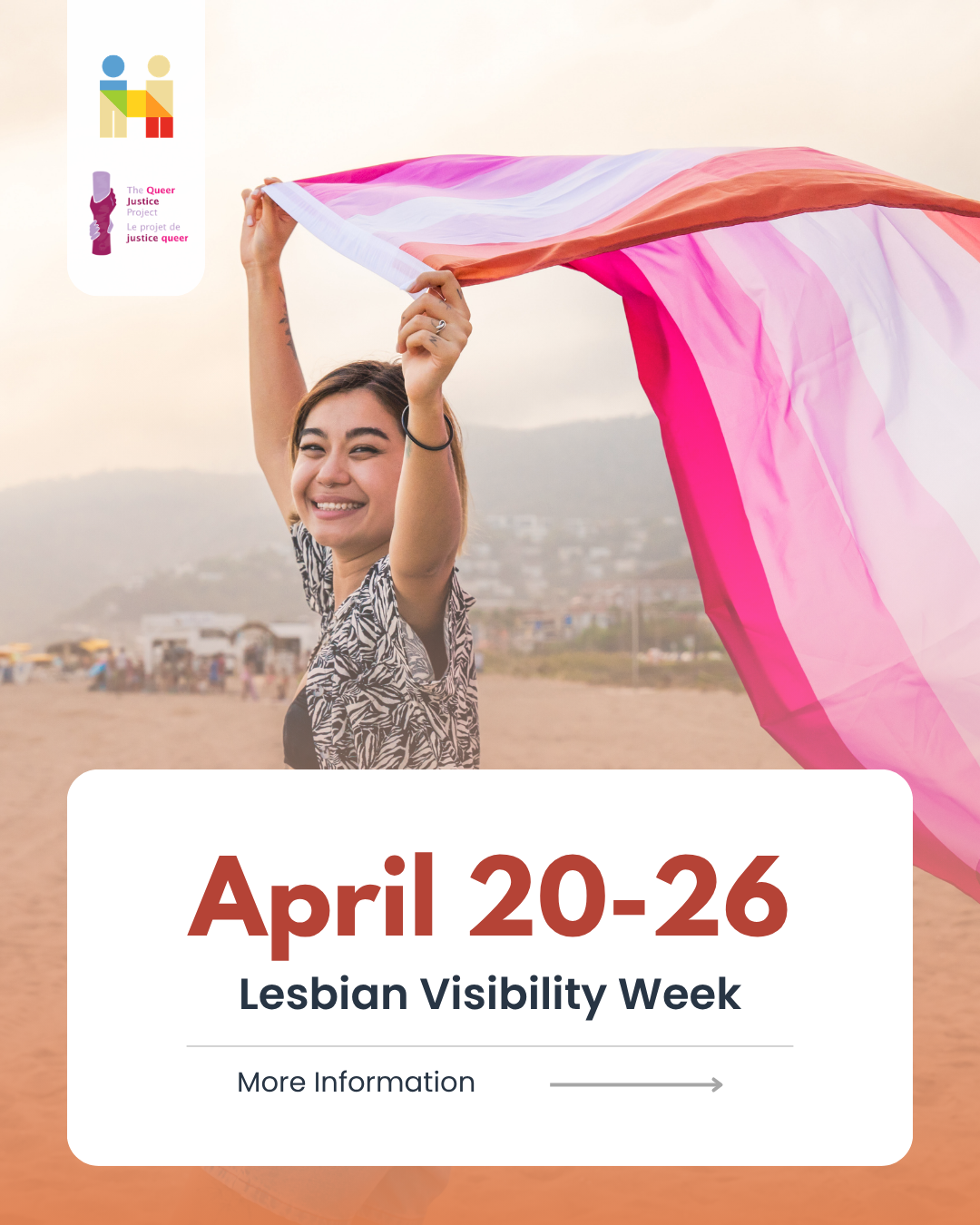
Happy Lesbian Visibility Week!
Today we’re celebrating not just visibility, but the rich and deeply rooted history of lesbian communities right here in Hamilton, Ontario.
The Women’s Bookstop, opened in 1985 as Hamilton’s first feminist and queer bookstore, became a vital hub for connection and activism. More than a bookstore, it was a gathering place where women and queer communities could meet, organize, and imagine new possibilities. It hosted events, supported feminist publishing networks, and created a rare space where lesbian lives and stories were visible and valued.
Around the same time, the Hamilton Gay and Lesbian Alliance (GALA) played a key role in building 2SLGBTQ+ community in the city. When GALA started Hamilton Pride in 1991, Mayor Bob Morrow refused to issue a formal civic proclamation recognizing it, something which was commonly done to promote significant events in the city. In response GALA brought and won an Ontario Human Rights Commission complaint against the city.
Lesbians have also played a critical and often under-recognized role in 2SLGBTQ+ history during the AIDS crisis. In Hamilton and beyond, lesbians showed up as caregivers, organizers, and advocates: raising funds, providing care, fighting stigma, and building support networks when many others turned away. Their leadership and compassion helped sustain communities through one of the most devastating public health crises of our time.
This history matters right now. At a time when Hamilton’s queer and trans communities are facing renewed backlash and rising hate, these stories remind us what collective care, resistance, and solidarity look like. The generations before us didn’t wait for acceptance — they built community anyway, defended each other, and demanded better. Their legacy is not just something to remember, but something to carry forward. Lesbian Visibility Week is a chance to honour that past while recommitting to the work ahead — to protect, uplift, and stand alongside queer and trans people in Hamilton today.
Our history matters. Our spaces matter. We are still here.
Sources:


